DJ Gutter → GoldVoltron
If you arrived through DJGutter.com, this is the current site. I changed my DJ name from DJ Gutter to GoldVoltron in 2010. The original Sewer Slime history is preserved here alongside my current work.
SEWER
SLIME
Skratch Slipmat Archive · 1998–2006
Sewer Slime started as something I made for my own setup because I wanted better record control. At the time, DJs were trying all kinds of ways to reduce drag under a record. The mat affected how the record released, how quickly the platter recovered, and how the whole setup felt under the hand.
Why I made it.
I made the first Sewer Slime mats in 1998 for my own setup. I was not trying to make a different-looking slipmat. I wanted less drag and more predictable movement between the record, the mat, and the platter.
Back then, DJs were using wax paper, plastic sleeves, CD-Rs, and other layers under regular mats. Just making things slippery was not enough. I wanted the record to release cleanly, the platter to recover quickly, and the setup to stay usable for mixing.
Another DJ tried the early version, word got around online, and people started asking for pairs. I began public production in 1999 and kept it going through 2006.
What the mat needed to do.
Period forum posts show DJs comparing Sewer Slime with felt mats, wax paper, plastic inserts, and other home-made setups. The discussion was about how a mat behaved under a record, not just how it looked.
If the record drags the mat with it, the setup fights you during skratching and back-cueing.
When you let go of the record, the platter should get back up to speed without a noticeable delay.
Too much slip can be just as annoying as too little. The goal was movement that felt predictable under the hand.
Period descriptions call the mats simple, gray, reversible, and without decorative printing.
How it spread.
I began developing Sewer Slime as a record-control fix for my own setup.
After a friend posted about the mats online, ZeeVee of SqratchAttack.com contacted me about carrying them in his store. That gave Sewer Slime an early retail outlet and helped turn the project into a public production run.
A Wayback capture dated August 6, 2001 preserves the Sewer Slime product page on djgutter.com. It records a price of $10 per pair plus $4.25 shipping/handling, names SqratchAttack, DNA Records in San Diego, and Skratch Club in LA, and mentions additional availability in Holland, Australia, and the UK.
Archived forum posts link directly to DJGutter.com and SewerLabs, mention Turntable Lab availability, describe Richmond production, and discuss Sewer Slime V2 outside the United States.
A surviving Future Producers discussion records the practical things I was thinking about: drag, release, platter slip, startup delay, and whether the setup still worked for normal mixing.
Production ended in 2006 after seven years. More than 10,000 sets were produced and fulfilled independently. That is the minimum total supported by the records I have now, and I will revise it if more production records turn up.
I am keeping the surviving mats, prototypes, photos, packaging, forum posts, and first-hand stories together here so the history does not disappear.
ZeeVee and SqratchAttack.
ZeeVee of SqratchAttack.com played a big part in getting Sewer Slime out of my own setup and into other DJs' hands. After a friend posted about the early mats, ZeeVee contacted me about carrying them in his store.
“It was Zeevee that got me into making them.”
That early support mattered. SqratchAttack gave the mats a retail home in the online skratch community and put them in front of DJs I was not reaching on my own. I want ZeeVee's part in that history documented here.
2013 retrospective account ↗
This portrait, identified as ZeeVee / Albert of SqratchAttack, was recovered from an older hard drive. The exact date of the photograph is still unknown.
Open recovered image ↗
This alternate SqratchAttack logo was recovered with the other store-era material. Its exact date of use is unknown.
Open recovered image ↗
This wider SqratchAttack banner was also recovered from the older material. Its exact date of use is still unknown.
Open recovered image ↗
This recovered SqratchAttack image appears to be a cropped or partial logo element. I do not know its original page placement or date, so I am leaving those details unassigned.
Open recovered image ↗What survived.
This section brings together what has survived: the original prototypes, the printed order insert, images recovered from the August 6, 2001 djgutter.com product page, production-era mats, the Gutter Grates prototype, promotional photos, graphics, merchandise, and product literature.
Several recovered 2004 photographs show bright yellow material around the Sewer Slime mats. That was not a photo backdrop. It was a separate prototype called Gutter Grates, a one-piece cover I was working on to protect the turntables and mixer when they were not in use. Both projects ended up in the same photographs.
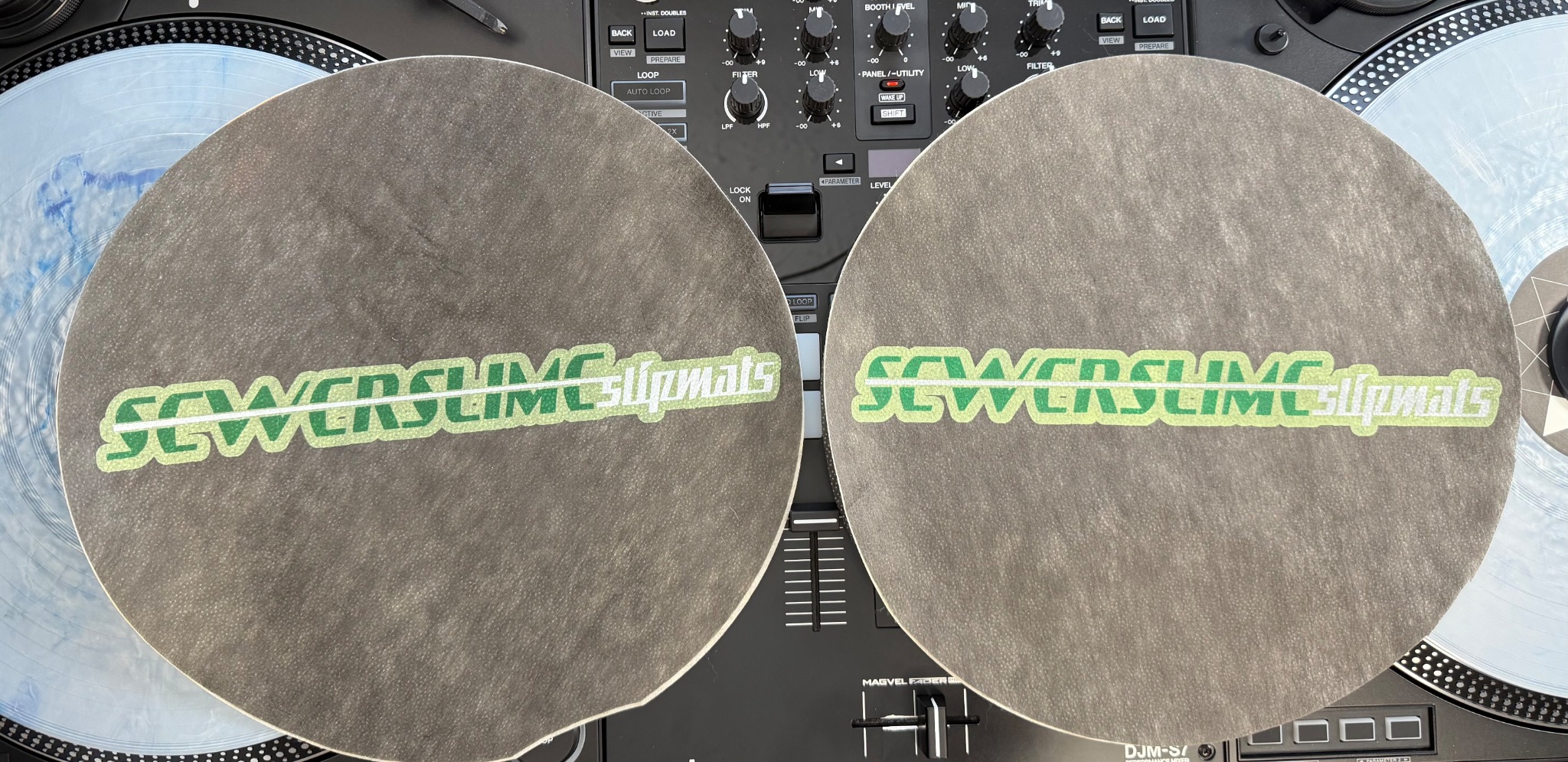
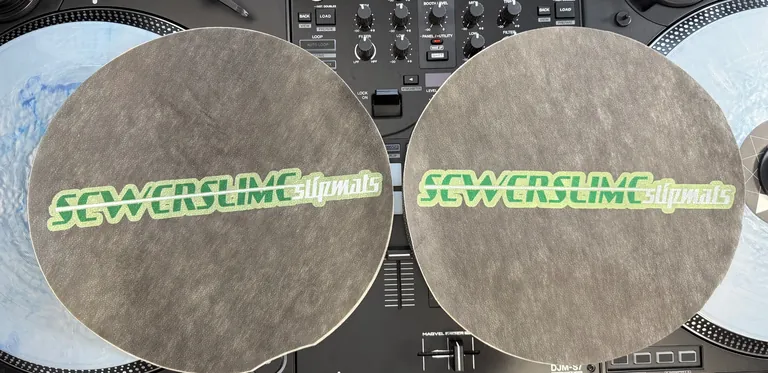
The surviving original Sewer Slime prototypes photographed in 2026. They remain unpunched, with no center spindle holes, preserving their development form.

Straight-down present-day view showing the complete prototype, logo placement, material, edge, and the absence of a center spindle hole.
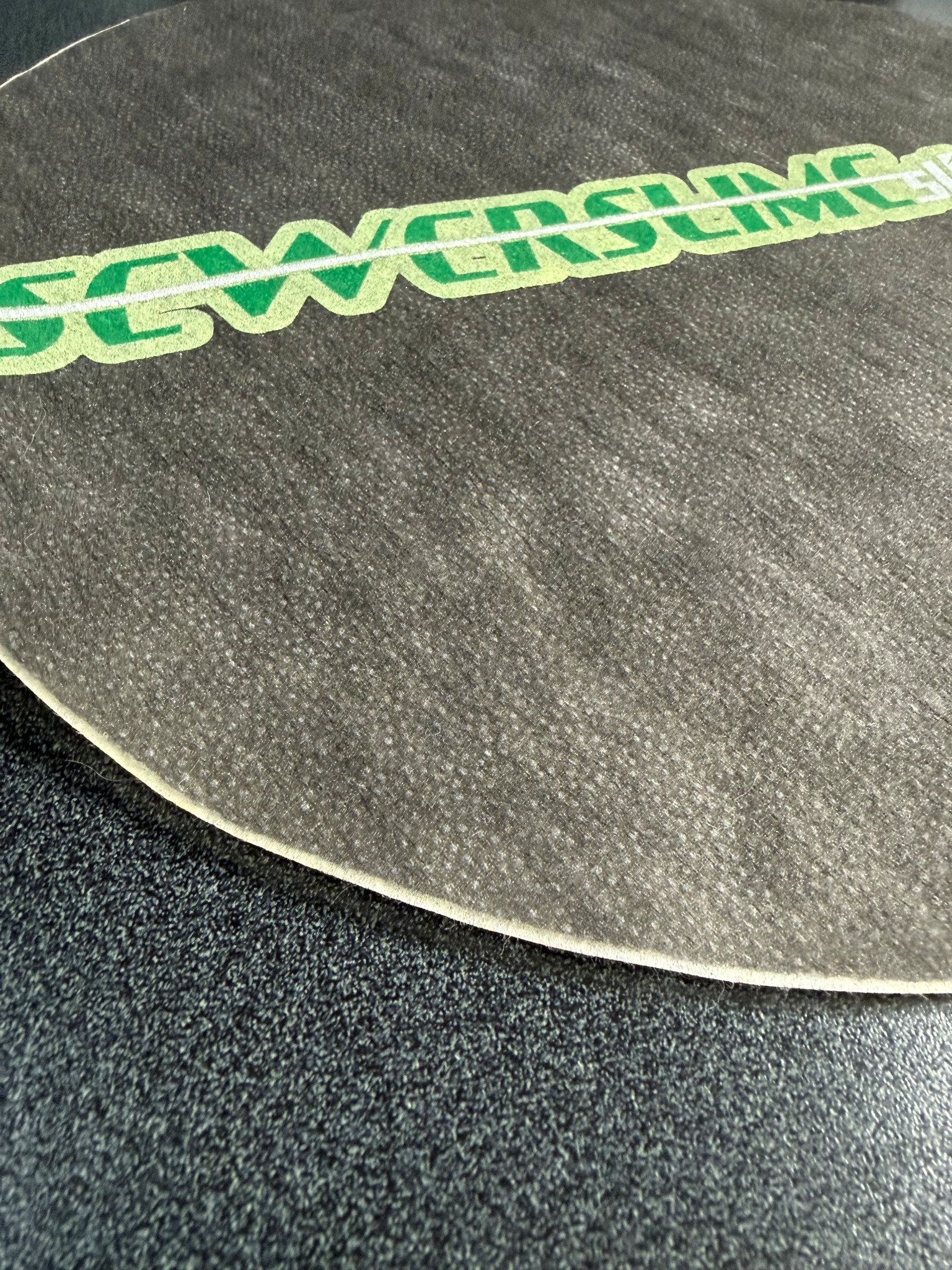
Close-up detail showing the thin edge construction and fibrous surface of the preserved prototype.
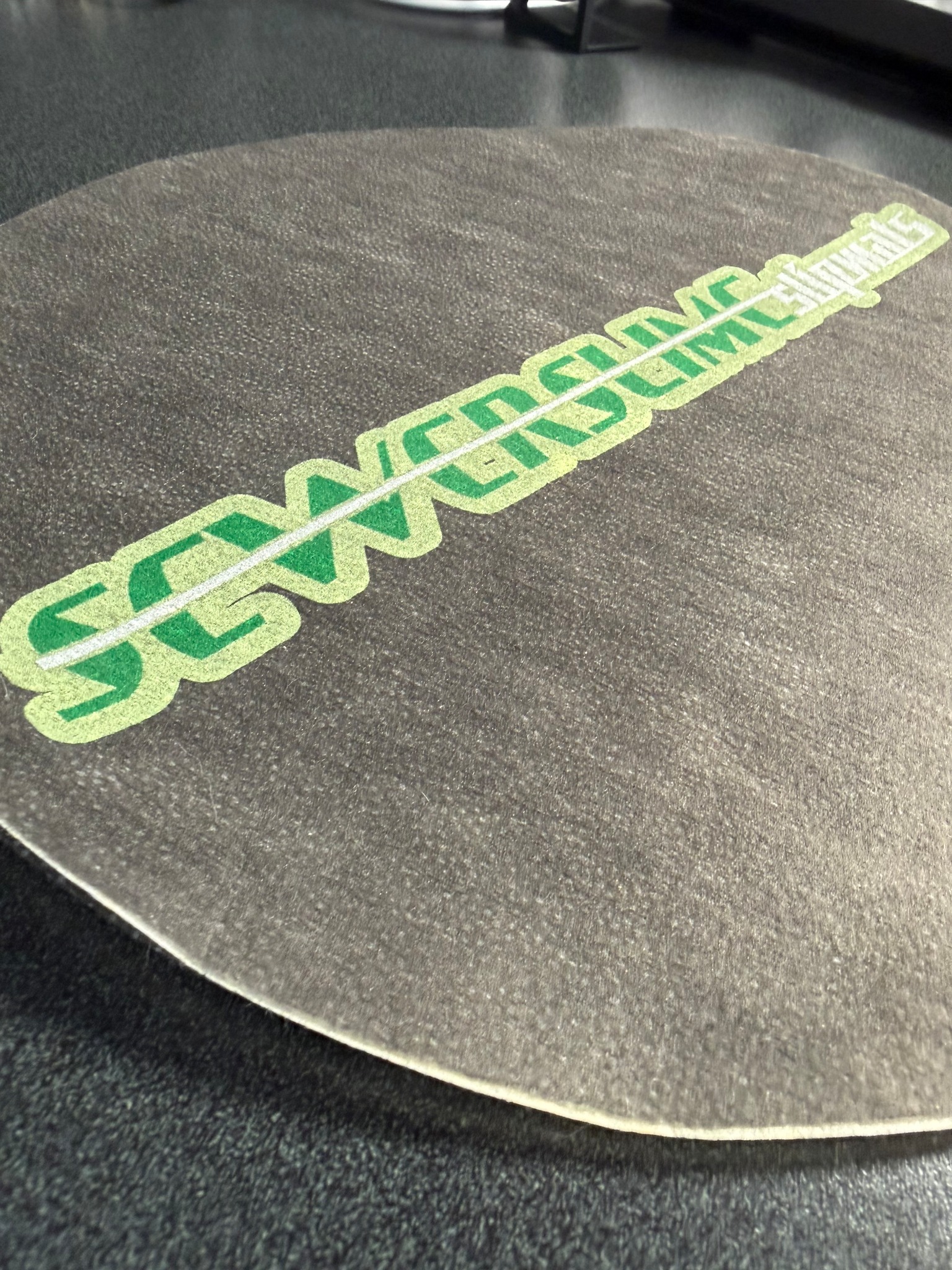
A low-angle present-day view emphasizing the surface texture and surviving printed mark.

The physical Sewer Slime insert that accompanied orders, photographed in 2026. It preserves the original language used to explain drag, response, hand control, needle skipping, static cling, and the role of the slipmat in skratching.

Recovered digital version of the production-era promotional insert, preserved alongside the surviving printed copy.

Present-day photograph of the preserved Sewer Slime print mark, retained as part of the physical archive.

Recovered full overhead photograph of a brown production mat. EXIF date: March 26, 2004.
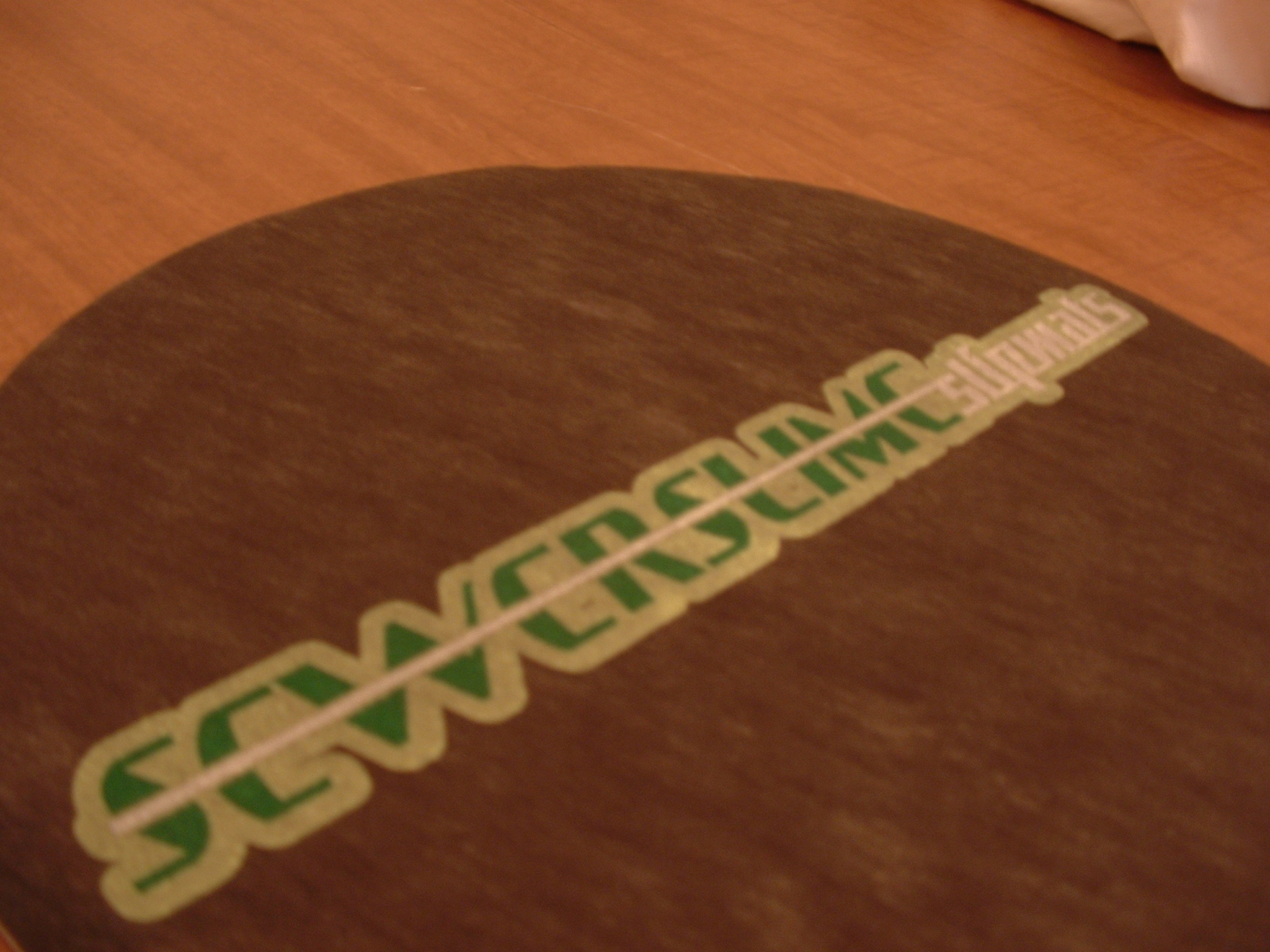
Close-up period shot highlighting the logo and material texture. EXIF date: March 26, 2004.

Recovered March 26, 2004 image. The yellow material visible around the mat belongs to Gutter Grates, a separate prototype project exploring a one-piece protective cover for the turntables and mixer.

Recovered overhead shot of the gray production mat, with the yellow Gutter Grates prototype material visible beneath it. EXIF date: March 26, 2004.
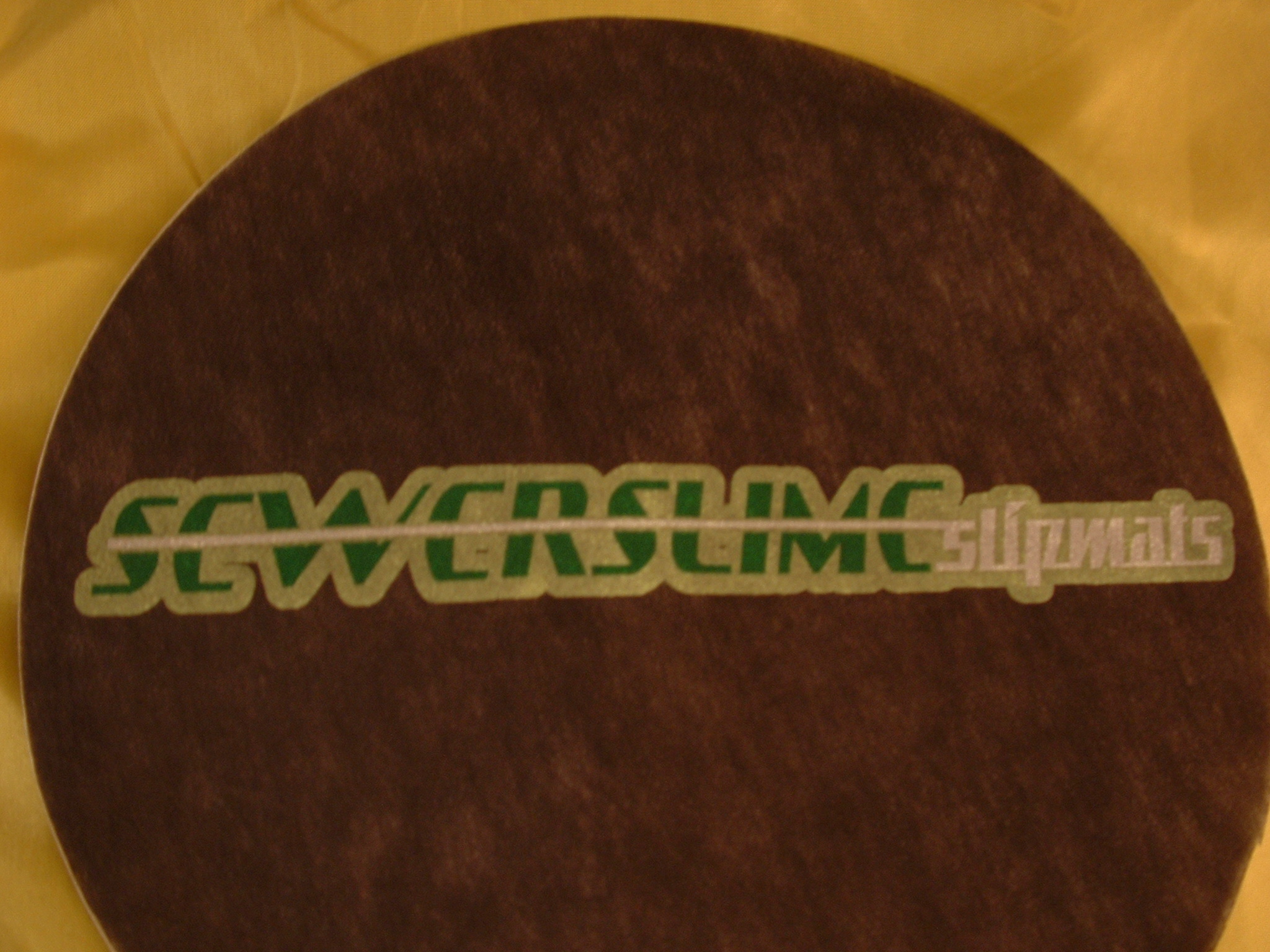
Recovered centered view of the brown production mat. The yellow material beneath it is from the separate Gutter Grates prototype project. EXIF date: March 26, 2004.

Original image asset recovered directly from the August 6, 2001 Wayback capture of djgutter.com/slipmats.html. This replaces the previously undated recovered copy with the archived source file and a documented web-use date.
Recovered period Sewer Slime slipmats graphic preserved from the older hard drive. Exact original use and date are currently unverified.
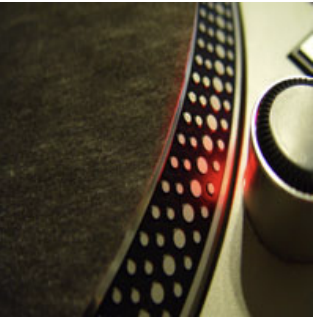
Recovered close-up promotional photograph of Sewer Slime on a turntable, showing the mat surface and edge against the platter.
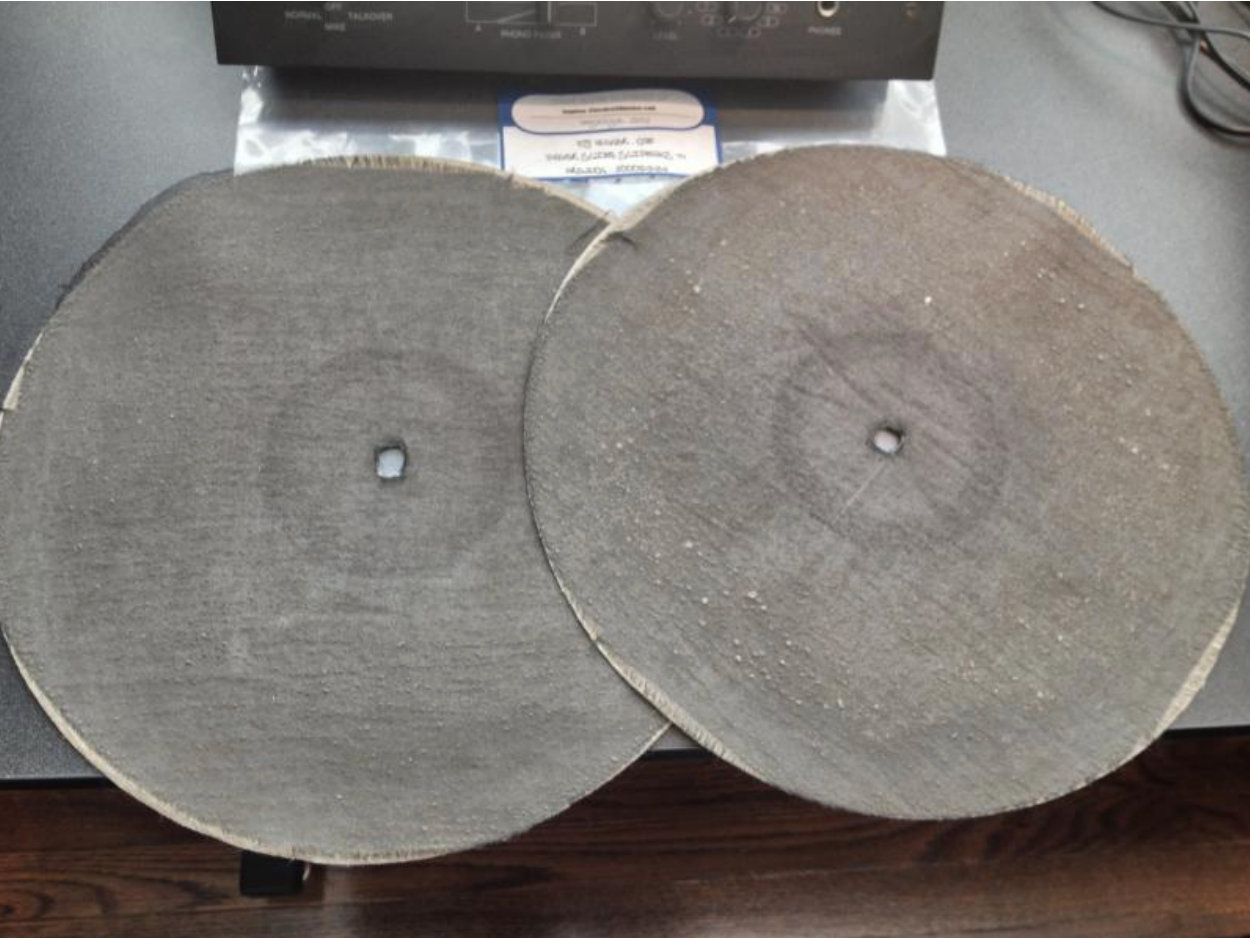
Recovered promotional-era overhead photograph of a pair of Sewer Slime slipmats.
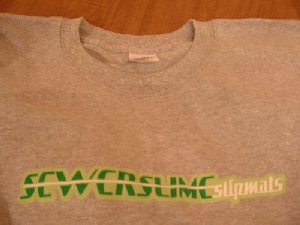
Recovered period photograph of a Sewer Slime Slipmats promotional shirt.
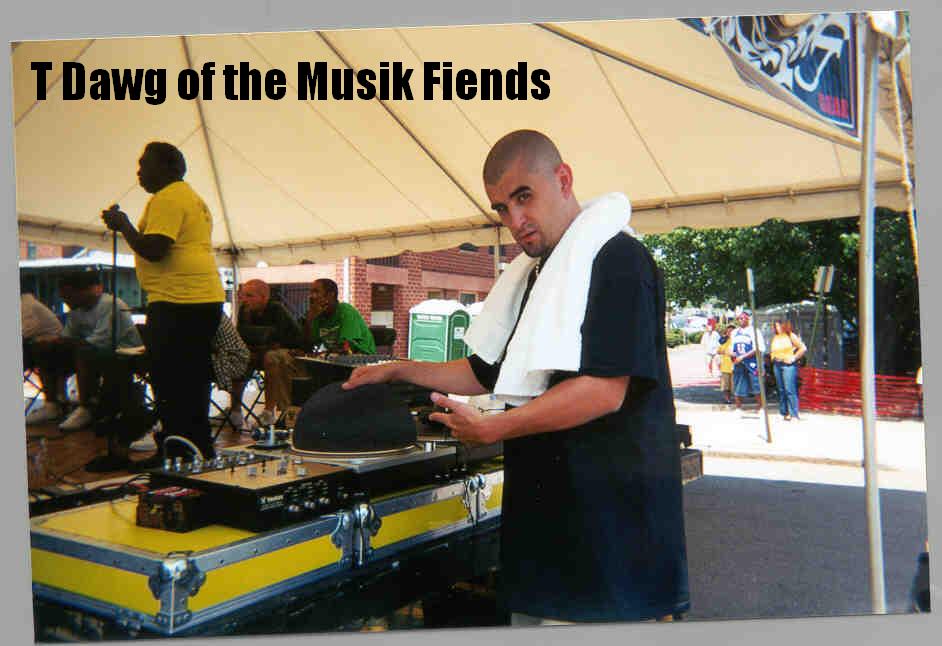
This exact image is embedded in the surviving August 6, 2001 Wayback capture of the Sewer Slime product page. The capture documents the image in use by that date; the photograph’s original shoot date remains unknown.
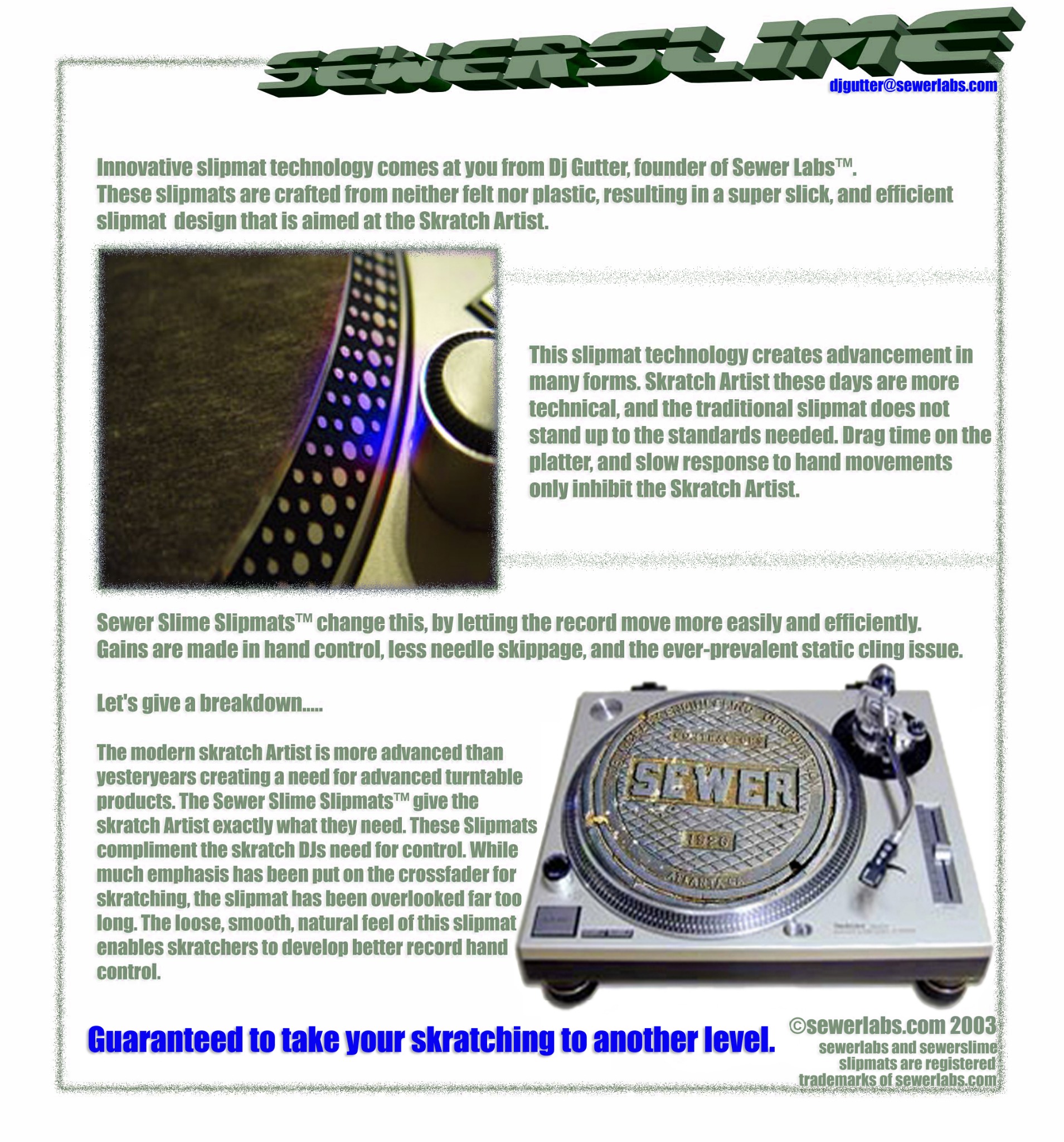
Recovered Sewer Labs promotional sheet dated 2003. It preserves the original product language about drag, response, hand control, needle skipping, static cling, and the slipmat as a purpose-built tool for the skratch artist.
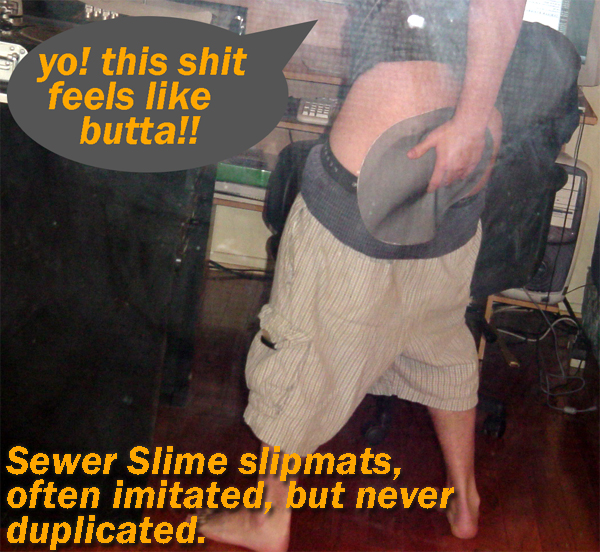
Recovered Sewer Slime promotional graphic using the line “often imitated, but never duplicated.”
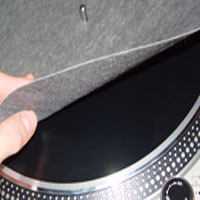
Recovered promo-era detail photograph showing the Sewer Slime material being lifted from the platter edge.

Original ss5.gif image asset recovered directly from the August 6, 2001 Wayback capture of djgutter.com/slipmats.html. It is preserved here as a period web-branding artifact.
The original prototypes still do not have center spindle holes, and the photos show them as they exist today. When I can tie an older image to a dated Wayback page, I list the date. When I cannot, I leave the date unknown. I am also leaving the old digital-camera photos and web graphics as they are instead of cleaning them up to look newer.
The conversation around slipmats changed.
By the early 2000s, DJs were openly comparing slipmat materials and setups the same way they compared other scratch gear. Sewer Slime was one part of that conversation.
Early-2000s forum threads compare Sewer Slime with Butter Rugs, Focus mats, Technics mats, wax paper, plastic sleeves, and CD-R underlayers. DJs were talking about what a slipmat actually did under the record, not treating it as just a piece of felt.
What the old web still shows.
The old forum threads and product pages show what people were actually saying at the time. I keep a short local reference extract for each citation so the basic evidence is not dependent on one outside link staying online.

This period banner shows the Sewer Labs identity and djgutter.com address used at the time. I keep it with the web material rather than the product-photo section.
Primary-source capture of the Sewer Slime product page. It documents the product positioning, $10-per-pair price plus $4.25 shipping/handling, and named retail/distribution references including SqratchAttack, DNA Records in San Diego, and Skratch Club in LA.
Local reference savedArchived users point directly to djgutter.com and note that Sewer Slime was also available through Turntable Lab.
Local reference savedThe discussion describes Sewer Slime as gray on both sides, reversible, and intentionally focused on function rather than printed graphics.
Local reference savedA surviving post links the SewerLabs product page and describes the mats as handmade in Richmond, Virginia.
Local reference savedA period discussion documents the design questions that mattered: record drag, platter slip, release/startup response, and usability for both skratching and mixing.
Local reference savedGerman DJs discuss Sewer Slime V2 by DJ Gutter and reference DMC mailing availability, showing the name circulating internationally.
Local reference savedA period fader-care discussion directs DJs to buy CAIG lubricant from SqratchAttack.com, showing the store was already serving the scratch community as a specialist retailer.
Local reference savedUsers explicitly credit SqratchAttack.com for Rane Empath review/gallery photos, another surviving trace of the site as a recognized gear resource.
Local reference savedAn archived support post by the user “zeevee,” signed “albert,” links directly to sqratchattack.com/catalog while asking how to improve the store product layout.
Local reference savedA second archived “zeevee” support post, again signed “albert,” references SqratchAttack catalog administration and confirms hands-on maintenance of the online store.
Local reference savedA retrospective interview preserves the Sewer Slime story and directly credits ZeeVee of SqratchAttack.com with asking to sell the mats and helping turn the personal experiment into a real production run.
Local reference savedFor each source, the site keeps the citation details, a short extract, and enough context to explain why it is here. The full machine-readable manifest stays in the archive.
Still out there.
Every so often, an old Sewer Slime mat turns up in a DJ's collection or on a setup that has been around since the original run. I am keeping those present-day photos and recollections here too.
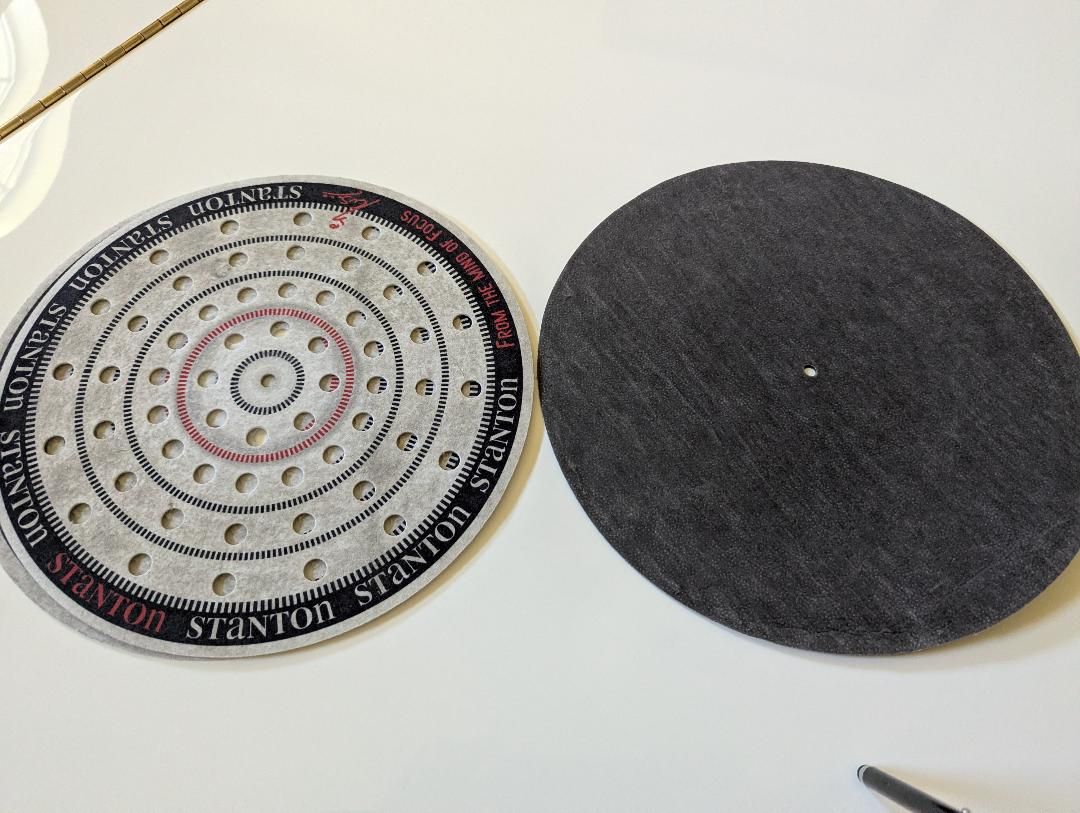
DJ Manila Ice
DJ Manila Ice shared this photo in 2026. It shows an original Sewer Slime mat from his early scratch-DJ days beside a Stanton Focus slipmat from the same period.
“OG Gutter rug and DJ Focus slipmats from my early days…”
Community accession 01 · present-day owner documentation.
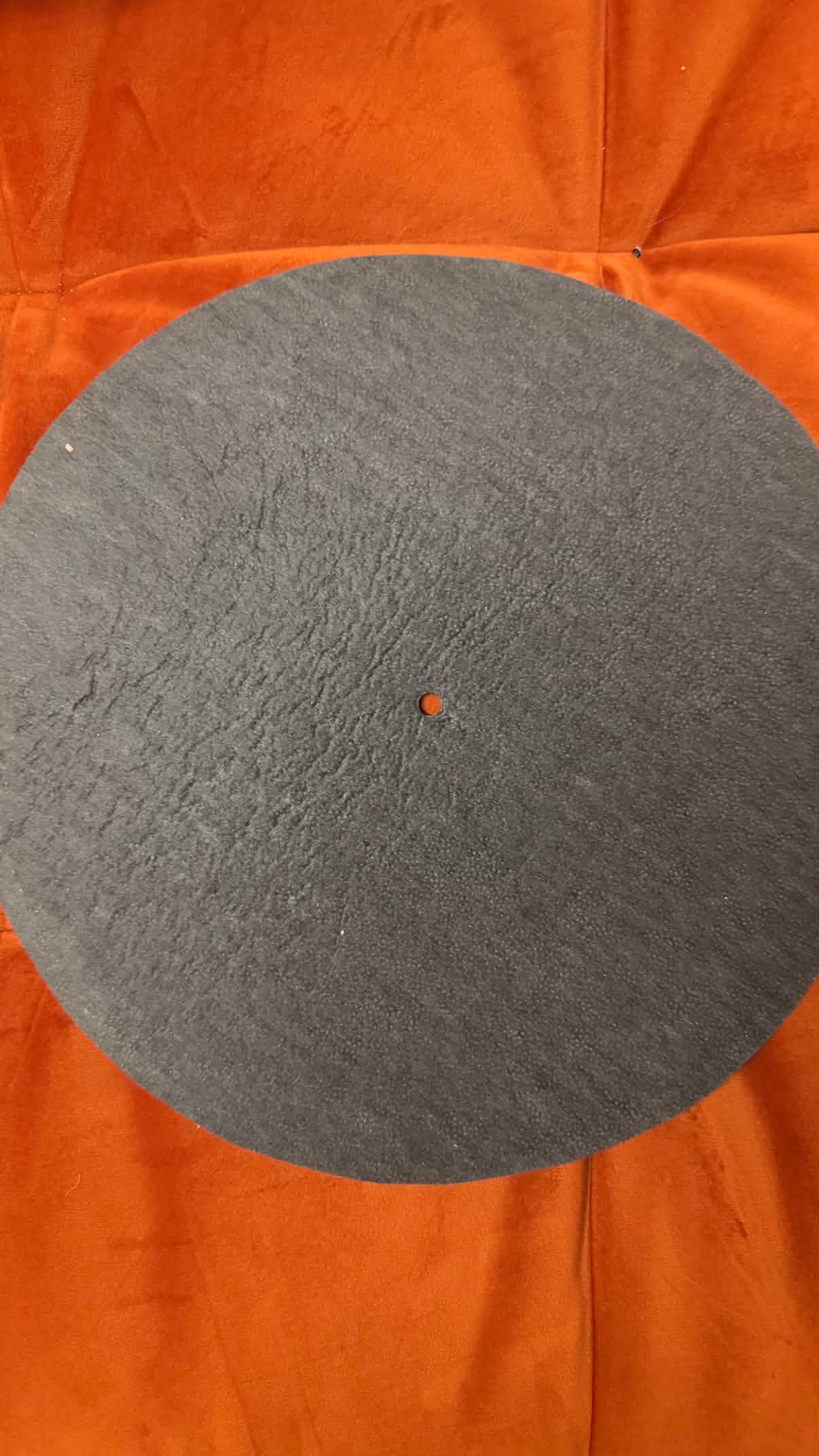
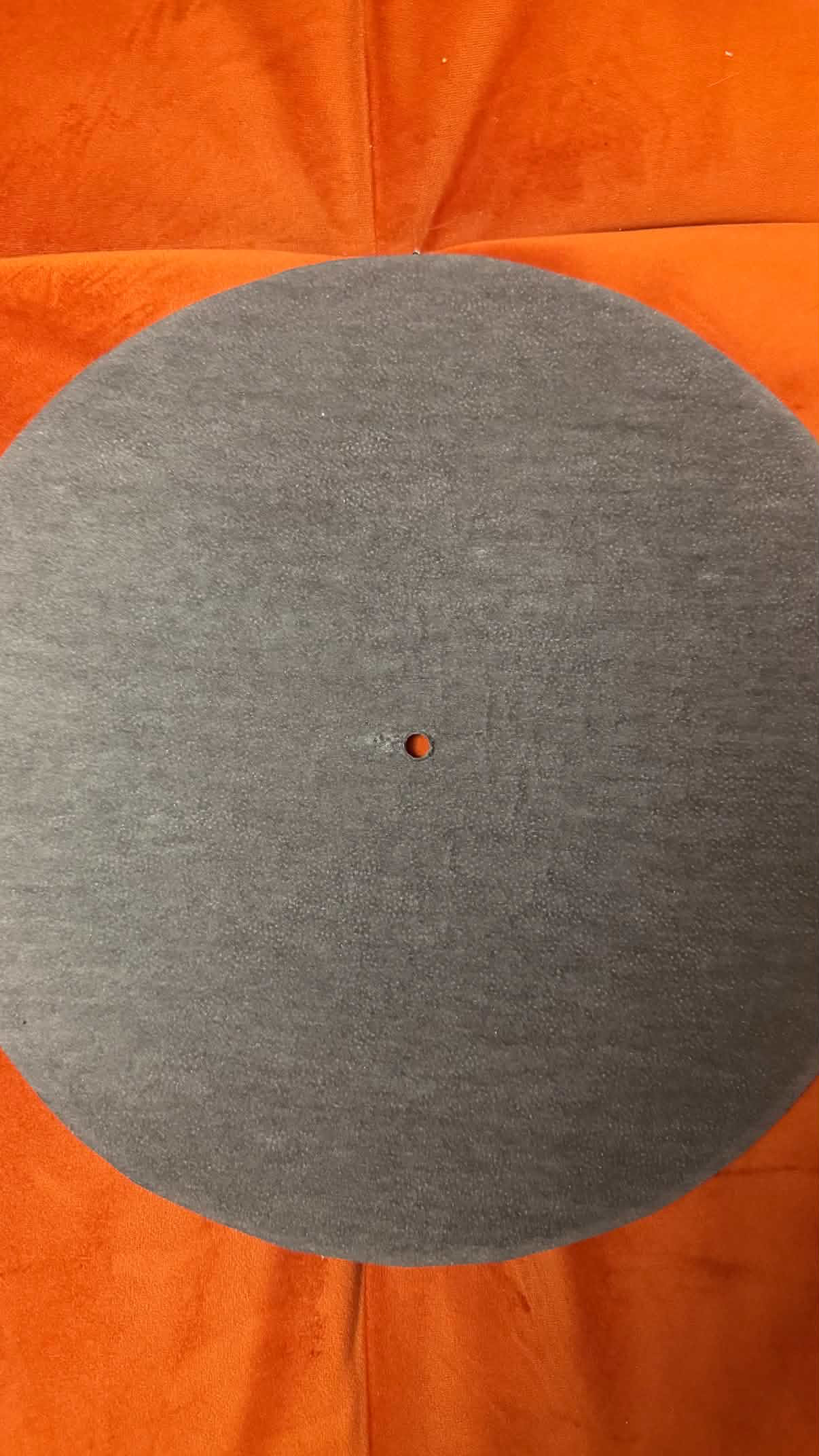
Dann Ryan
Dann Ryan remembers buying his used Technics 1200s in 1999 while he was still in high school. He says I sent him a pair of Sewer Slimes as a congratulations, and that the mats have stayed with those same decks through years of use and trips to clubs.
“@goldvoltron I know I got my 1200s in 1999 (used) and you sent me, a broke high school kid, a pair of Sewer Slimes as a congrats. I still have those decks and the mats have literally never left them. Carted around to a many clubs still kicking.”
Community accession 02 · owner recollection and present-day photographs.
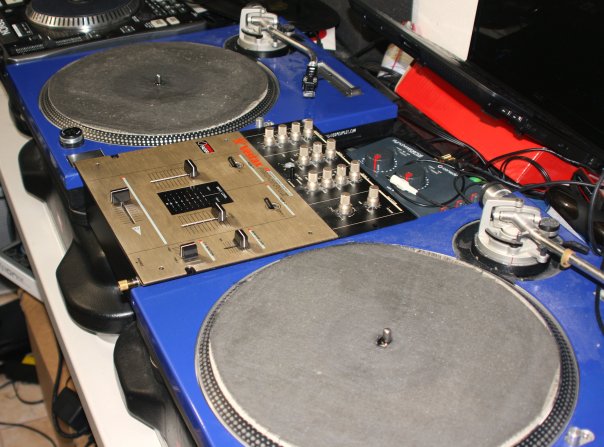
V2 Sewer Slimes in use
I recovered this setup photo from a backup drive. It shows a pair of V2 Sewer Slime mats in use, but I could not verify who originally sent the image or when it was taken, so I am leaving both unknown.
Community accession 03 · recovered V2 setup photograph · attribution and date unverified.
What changed in the timeline.
A 2013 interview remembered the first design as “late 1999.” This archive uses the later reconstructed timeline: development in 1998, with public production beginning in 1999.
The older recollection and the later evidence do not match exactly, so I am showing both. Forum posts, product pages, order material, and original photos are what I use to tighten the timeline when better evidence turns up.
Sewer Slime started with a simple problem: I wanted better record control. This archive is here to keep the mats, people, experiments, and conversations from that period together without making the story bigger than it was.
Site designed by GV.
This site was designed, shaped, and built by me — GV — one decision at a time. I wanted complete control over how GoldVoltron looks, feels, and works instead of fighting templates, page builders, or other BS.
The public experience you see here is custom-designed and custom-coded around GoldVoltron rather than dropped into a stock template. The tools, layouts, connections, little details, and constant refinements exist because I wanted the site to work the way I thought it should.
It has taken a long time, a lot of trial and error, and a ridiculous number of small decisions. It is still evolving, but that is part of the point.